NATIONAL DIALOGUE – DETERMINING THE FUTURE WE WANT
(THESE ARE DOCUMENTS PRODUCED BY THE LEGACY FOUNDATIONS REFLECTED AT THE END – THEY ARE PRODCED HERE TO PROMOTE AN UNDERSTANDING OF THE CONCEPT OF THE NATIONAL DIALOGUE – THE…
(THESE ARE DOCUMENTS PRODUCED BY THE LEGACY FOUNDATIONS REFLECTED AT THE END – THEY ARE PRODCED HERE TO PROMOTE AN UNDERSTANDING OF THE CONCEPT OF THE NATIONAL DIALOGUE – THE JOURNEY TRAVERSED AND THE PRINCIPLES GUIDING THE NATIONAL DIALOGUE – SUCH AS THAT IT MUST BE CITIZEN LED AND THE GOVERNMENT PLAYS A SUPPORTIVE ROLE)
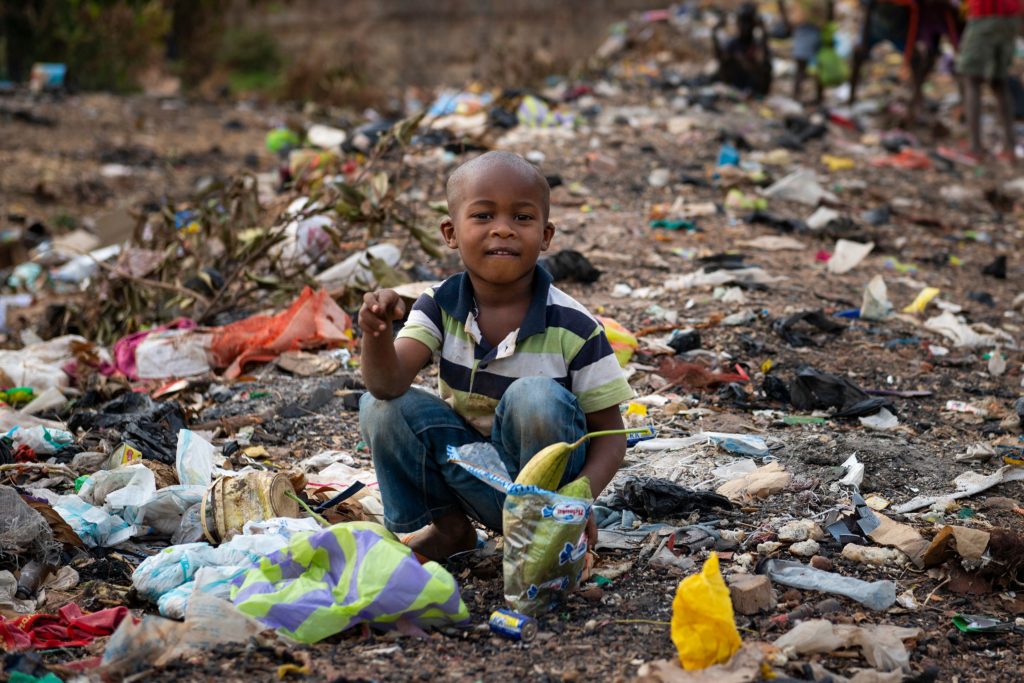
By the time democratic South Africa held its Seventh General Election in 2024, the country was in the grip of a general crisis. Among others, that crisis was characterised by:
• a stagnant economy;
• an ever-increasing unemployment and poverty rate;
• worsening socio-economic inequality;
• a worsening incidence of crime, corruption and lawlessness; and,
• a fracturing of society and therefore the weakening of social and national cohesion.
GENERAL CRISIS
Already by the time we were hit by the Covid-19 pandemic in 2020, the view had taken hold that it required the combined effort of the whole of society to extricate the country from its general crisis.
Out of this was born the resolve for the social partners, government, business, labour and civil society, to conclude a binding social compact.
Unfortunately, the effort to conclude this social compact did not succeed.
However, this did not mean that the time for the social compact had not come.
THE SOUTH AFRICA WE WANT
To the contrary, the outcome of the 2024 General Election confirms the point that the electorate does not believe that there is any one vision which guarantees a better future for our country. It stands to reason that the moment is upon us that our people as a whole must now take the responsibility to define – the South Africa We Want!
Thus would the people themselves address the historic objective to help ensure our country’s social and national cohesion without which it cannot survive. In addition, it seems only wise and rational that “We, the people of South Africa” to whom our Constitution refers, must take the opportunity of the 30 Years of our Democracy to assess where we are, in order to develop a consensus about where we should be!
It is for these reasons that it is imperative that that we, the people of South Africa, must meet together in an Inclusive National Dialogue to confer about the South Africa We Want.
WHAT THEN MUST THE NATION DO?
1. To define the transition from apartheid to democracy, the entire cross spectrum of our political leadership came together in the inclusive Convention for a Democratic South Africa (CODESA).
2. To extricate our country from the general crisiswhich has engulfed it, demands that once again the entire cross spectrum of our leadership should come together in another CONVENTION FOR DEMOCRATIC RENEWAL (CODER).
3. The CODER should begin its sessions soon after the General Election, in June 2024. The First Session would be a representative and inclusive National Convention attended by a maximum of one thousand (1 000) delegates.
4. Among others, the Convention would select a Convening Authority.
4.1. It would model the CODER Convening Authority (CODER CA) on an expanded NEDLAC construct.
5. The CODER CA should therefore be constituted by three each (3 each) representatives of:
(i). Organised labour and Staff Associations;
(ii). Business;
(iii). Civil society (current NEDLAC constituency);
(iv). Religious communities;
(v). The Women’s Movement;
(vi). The Youth Movement;
(vii). Academia and Professional Bodies;
(viii). Traditional leaders;
(ix). Traditional healers;
(x). Community Organisations;
(xi). Arts and Culture;
(xii). Sport; and,
(xiii). The top 5 Political Parties elected into the National Assembly, or those which together
account for seventy percent (70%) of the Electorate; as well as,
(xiv). Invited individual participants.
6. The CODER CA would establish a nine-person (9-person) Working Committee drawn from among its members, which will ensure the implementation of its decisions.
7. The central task of the CODER will be to elaborate a National Pact on a number of identified areas, which would guide the work of any National Government constituted after the 2024 General Election.
8. The following could be the matters to serve on the CODER Agenda:
A. Discussion on the matter of:
“Respect and defence of our Constitutional State and its Democratic structures in the form of its: Constitution, Parliament, Section 9 Institutions, fiscal legislation and electoral procedures.”
B: Discussion on the matter of:
“Building a capable State in all three spheres, including a review of the Constitutional provisions relating to each sphere.” (LEGISLATIVE – EXECUTIVE – JUDICIARY)
C. Discussion on the matter of:
“The elaboration of a concrete social compact by the NEDLAC social partners to turn around the economy to ensure that it grows and develops in an inclusive manner, resulting in continuous reduction of unemployment and the sustained reduction of the levels of poverty and inequality.”
D: Discussion on the matter of:
“A comprehensive Energy Plan based on the Draft 2023 INTEGRATED RESOURCE PLAN (IRP) and therefore deal with all relevant matters including the place on nuclear energy, the role of the public and private sectors, the renovation of the coal fired power stations, and honouring our environmental commitments.”
E. Discussion on the matter of:
“A comprehensive short- and medium-term Plan to fight Crime and Corruption, including a review of the existing or projected relevant institutions and programmes.”
F. Discussion on the matter of:
“Basic and Higher Education and Training, including addressing such issues as the curricula, dropouts, relevant skills, the quality of teaching, the 4th Industrial Revolution (4IR), education infrastructure and funding.”
G. Discussion on the matter of:
“The Social Security Net, including its impact on poverty reduction and the matter of the possibility of a Basic Income Grant.”
H. Discussion on the matter of:
“A foreign policy based on multilateralism and multipolarity, with active involvement with SADC, the AU including the AFRICAN CONTINENTAL FREE TRADE AREA (AfCFTA,) the UN, BRICS, Organisations of the Global South, and the G20, committed to world peace, an equitable international economic order and global environmental health.”
I. Discussion on:
“Other Matters which may be raised by any of the participants, e.g. CITES and its bearing on the matter of Saving the Rhino.”
9. The National Convention will conclude by adopting Broad Resolutions on all the matters on its Agenda, which will constitute the NATIONAL PACT FOR DEMOCRATIC RENEWAL (NPDR).
10. On the basis of these Resolutions, the NPDR, the CODER CA will prepare the detailed Project Proposals which would serve as Guides to the National Government.
11. The Executive Council of NEDLAC should serve as the Preparatory Committee for CODER. Its tasks are:
(i) to prepare Discussion Papers on the Agenda items listed above;
(ii) to engage the various Constituencies identified above to choose their delegates to CODER;
(iii) to attend to all logistics relevant to the CODER;
(iv) to attend to all logistics relevant to the CODER CA;
(v) to co-opt anybody/institution to assist it;
(vi) to work with the current Government to secure all the required funding;
(vii) to handle all Communication concerning CODER; and,
(viii) to function until CODER establishes its own structures.
12. The Working Committee of the CODER CA will appoint Expert Subject Committees (ESCs) which will work with Government to ensure practical respect for the Individual Pacts which would be elaborated by the CODER CA.
13. The CODER CA will meet twice a year to receive a report from its Working Committee.
14. The CODER will meet twice during the life of the 2024 National Government to receive a report from the CODER CA.
PRESIDENT CYRIL RAMAPHOSA AT THE FIRST NATIONAL CONVENTION OF THE NATIONAL DIALOGUE – UNIVERSITY OF SOUTH AFRICA – TSHWANE 15 AUGUST 2025
On the 15th August 2025 President Ramaphosa addressed what was called the FIRST NATIONAL CONVENTION AT THE UNVERITY OF SOUTH AFRICA and here is what he said in part:
“We are gathered to listen to each other, to understand one another and to chart a common path forward for our country. We meet at a time of profound challenges: economic hardship, unemployment, inequality, growing poverty and a crisis of confidence in our institutions. We also meet at a time when the world is rapidly changing and our ability to adapt and renew ourselves will define the next generation.”
A CALL TO THE RECLAIM THE NATIONAL DIALOGUE
The National Dialogue gives the people of South Africa the opportunity to define the South Africa they want and the one they don’t want. 18 06 2025
On June 27, 2024, several Legacy Foundations made a call to “to the people of South Africa to join in a National Dialogue to reorientate the direction of our nation,” after many years of decline in which the promise of April 1994 had been broken. We do not claim to have been the first to have made such a call, it had in fact been made by many South Africans over the years. What these Legacy Foundations simply did on that day was to action these calls.
Over the following months, we engaged with many civil society organisations culminating in a two-day strategy session in September 2024, in which the 50 organisations that gathered (THE SEPTEMBER 50) worked to collectively define principles of what the National Dialogue should be and how it should be structured. First among these principles is that the National Dialogue be solution-driven; and secondly it must be citizen-led.
A SOLUTION-DRIVEN NATIONAL DIALOGUE
The purpose of the National Dialogue is not to just rehash our problems but to address the critical question “what changes and actions are necessary to bring about real prosperity for all?” The National Dialogue must harness the collective wisdom of all South Africans to find solutions. As the collective wisdom of the people, implementation of these solutions must fall to all of us – citizens, government, business, labour, and all sectors of civil society. In searching for solutions, there must be no holy cows except a sacred determination that all South Africans, not just some, have a right to be prosperous. With successive governments having been given a mandate but failing to bring about a prosperous society, the answers must now come from elsewhere. Citizens must lead. And having found the solutions, citizens must be ever vigilant that their will is done. This will require a newly defined relationship between citizens and their representatives.
THE STRUCTURE OF A TRULY CITIZEN-LED NATIONAL DIALOGUE
An authentic, citizen-led National Dialogue cannot be led by government. Such would be a betrayal of its purpose. Its structures must be led by citizens at all levels. This includes the organisation of the District and Sectoral Dialogues. There must be no gatekeepers.
This is not to disrespect or exclude the role of government. It is purely a recognition that something isn’t working and we must urgently try something different. Government must play a supportive role under the direction of the citizens, not as the main driver of the process or its content.
The National Dialogue must be participatory democracy in action. This is what must distinguish it from all other prior processes. The SEPTEMBER 50 established various Sub-Committees which were to be constituted and led by civil society, including:
Content Sub-Committee to research and collate insights from similar initiatives locally and abroad; develop thematic guidelines; coordinate research; and collate the inputs of participants in the District and Sectoral Dialogues into a Final National Dialogue Report, National Compact and 30-Year Programme of Action.
Mobilisation Sub-Committee to develop programmes to garner widespread societal support for and participation in the National Dialogue activities.
Marketing and Communications Sub-Committee to develop and disseminate messages aimed at creating public awareness of support for and participation in the National Dialogue.
Management and Planning Sub-Committee to guide the preparation for the successful organisation of the National Dialogue process.
Monitoring and Evaluation Sub-Committee to ensure that citizens are at the forefront of influencing policy outcomes that give expression to the will of the people. This Monitoring and Evaluation Sub-Committee was also tasked with developing modalities to ensure that the decisions coming out of this process can be implemented through changes in policy, laws and perhaps even constitutional amendments.
The Sub-Committees included some 40 members from various civil society organisations. To coordinate these activities, the SEPTEMBER 50 established a Preparatory Committee compromising the leads of the Sub-Committees. The Legacy Foundations were nominated by the SEPTEMBER 50 to lead these Sub-Committees.
Earlier this year (2025) following extensive engagements with the emissaries of the Head of State, which the SEPTEMBER 50 gathering was apprised of, the Preparatory Committee evolved into a Preparatory Task Team to include emissaries of the Head of a State in a formal structure. Recognising that even this composition was not fully representative, it was also decided that the Preparatory Task Team and Sub Committees must be expanded.
This led to a proposal for a Steering Committee to which would be added two representatives from government; two representatives from business; two representatives from labour; one additional representative from civil society; one nominee from the legal fraternity; and one youth sector representative, in addition to other young people already active in the subcommittees. The composition of members of the Steering Committee must reflect the diversity of South Africans from the perspective of race, gender, age, religion and region.
Again from this composition, it was structured to be a truly people-led structure in keeping with the principle of a citizen-led process. The composition of the Sub-Committees would be expanded in a similar manner to the Steering Committee. To provide the day-to-day capacity to run the operations of the National Dialogue, the Preparatory Task Team came up with the idea of a Secretariat based at NEDLAC, which would be given responsibility and resources required for such a massive national effort. This would include central operational capacity, overseeing of Provincial Coordinators responsible for coordinating the Ward Dialogues, and rapporteurs ensuring that the inputs ultimately form the National Compact and 30-Year Plan of Action. The Secretariat would operate at the direction and leadership of the structures of the National Dialogue.
WHAT WAS PROMISED ON 10 JUNE 2025
When President Ramaphosa announced the National Dialogue Process and the Eminent Persons Group on 10 June 2025, which was presented as a vehicle to build on the foundation laid painstakingly by civil society.
However, the Unisa Gathering that has now emerged is a shadow of that original conception. It departs from the clear understanding that citizens must lead in design, content and execution, with government playing a supportive, not directive role. A people’s process cannot be recast as a state-centred event without betraying its purpose.
BETRAYAL OF A PEOPLE’S PROCESS
The process running up to the 1st National Convention has seen a betrayal of this civil society originated vision. What came to pass was a Preparatory Task Team in which only eleven out of thirty-three were from civil society, the rest a composition of government and NEDLAC employees with thirteen and nine members respectively.
A similar phenomenon played out in the Sub-Committees, with government at some point submitting a list of 81 civil servants to join this 40-member structure. The voice of civil society organisations was being drowned out. A betrayal of the covenant of the SEPTEMBER 50 that the National Dialogue will be citizen-led. The National Convention was designed to be content-driven, and the PTT had commissioned discussion documents that would serve as a conversation starter, which would be distributed to all sectors, along with fact sheets, summaries and translations in all the official languages, enabling participants in the 1st National Convention to make informed inputs. When these were not distributed, it was clear to the Legacy Foundations that the First National Convention was destined to be nothing more than just a “talk shop”.
The Unisa Gathering as currently configured risks reproducing the very habits that failed our society: centralised control, exclusionary gatekeeping, and opacity. If left unchallenged, it will become “just another talk shop that leads to nothing,” rather than a platform where ordinary South Africans reset the country’s course and hold every sector to account for implementation.
TIME TO RECLAIM THE NATIONAL DIALOGUE
A subversion of citizen-led National Dialogue must not be allowed to happen. Citizens and delegates at the Unisa Gathering must insist that it remains true to its original intent of citizen leadership both in substance and form. In this way the National Dialogue can fulfil its promise as a historic, transformative and truly citizen-led enterprise to make tomorrow a better country.
Failure to do so risks the National Dialogue descending into “just another talk shop that leads to nothing.” As people gather over the coming few days in Pretoria, and as the National Dialogue effort expands across the country the people of South Africa must not cede the space for engagement to government. No matter what resourcing it is facilitating – whether community halls or public funds – no government official, entity, or structure must be able to direct or determine the work of the National Dialogue.
Our commitment at the start of this process was that the National Dialogue must be something different from any prior compacting process we have had: the experience and structure of the process must do as much to support the agency and perspective of ordinary citizens to be heard as possible. This should be non-negotiable. We have already seen government co-branding communications about the National Dialogue. This inevitably presents it as a government initiative, and opens the door for other organs of the state to co-brand as they facilitate access to venues and other local resources. This is already a betrayal of the principle of the National Dialogue being independent and citizen-led.
TO THOSE WHO WILL NOT ATTEND: HOLD THE LINE
We respect and understand the principled decision of organisations and individuals who will not participate in the Unisa Gathering under present conditions. Do not retreat from the work. Redouble efforts to organise Ward, District, and Sectoral Dialogues where people speak for themselves about the country they want – and the country they do not want. A truly citizen-led National Dialogue is a generational opportunity to recalibrate our democracy and shape the future. Guard it. Grow it. Keep it independent.
TO THOSE WHO WILL ATTEND: DEFEND THE MANDATE
For those choosing to participate in the Unisa Gathering, go with clarity and conviction. We advise that you Demand – publicly and on the floor – that the National Dialogue be:
Citizen-led: Leadership, agenda-setting, and facilitation must sit with citizens at every level. Government’s role is supportive, not directive.
Representative: Structures must reflect South Africa’s diversity in race, gender, age, region, faith, language, and social strata, with open pathways for community-based organisations and the unorganised public.
Transparent: Selection processes, funding sources, agendas, and proceedings must be open; no co-branding that blurs independence; no gatekeeping that silences dissenting voices. Delegates at the Unisa Gathering, and all South Africans engaged in the process thereafter, must be vigilant and proactive in ensuring that this is their process. That this is a transformative platform for a different type of engagement. That their voices must be heard. If we cede these principles then we will have wasted a once-in-a generation opportunity to reset the vision and pathway forward for all South Africans.
ISSUED BY Chief Albert Luthuli Foundation Desmond and Leah Tutu Foundation Dumisani Makhaye Foundation FW de Klerk Foundation Oliver and Adelaide Tambo Foundation Thabo Mbeki Foundation Steve Biko Foundation Strategic Dialogue Group 14 August 2025

Leave a Reply